Women Who Rock Columbus: Vanessa Jean Speckman
For this next highlight, I went beyond the reach of 270. Now, I know the series is called Women Who Rock COLUMBUS, BUT, it is not her fault that I completely missed every show she had before leaving the 270 outer belt in 2025. In fact, it’s totally mine and now that I’ve met her and have been exposed to all of her work, I am forever bummed out that I didn’t get to know her while she was here.
Vanessa is the quintessential rule breaker. From her art to poetry and writing as the front person for Call Me Rita, you can tell she is on a mission to help break the masses free of societies norms. Speaking about things at shows that include frustrations with the American health care system and how her body autonomy changes from state to state while her partner Micah’s doesn’t, she is bringing awareness to everyday life issues that most wouldn’t dare to touch. Her spirit embodies that perfect folk punk rebellion the world needs right now.
So without hesitation…
Allow me to introduce you to Vanessa!
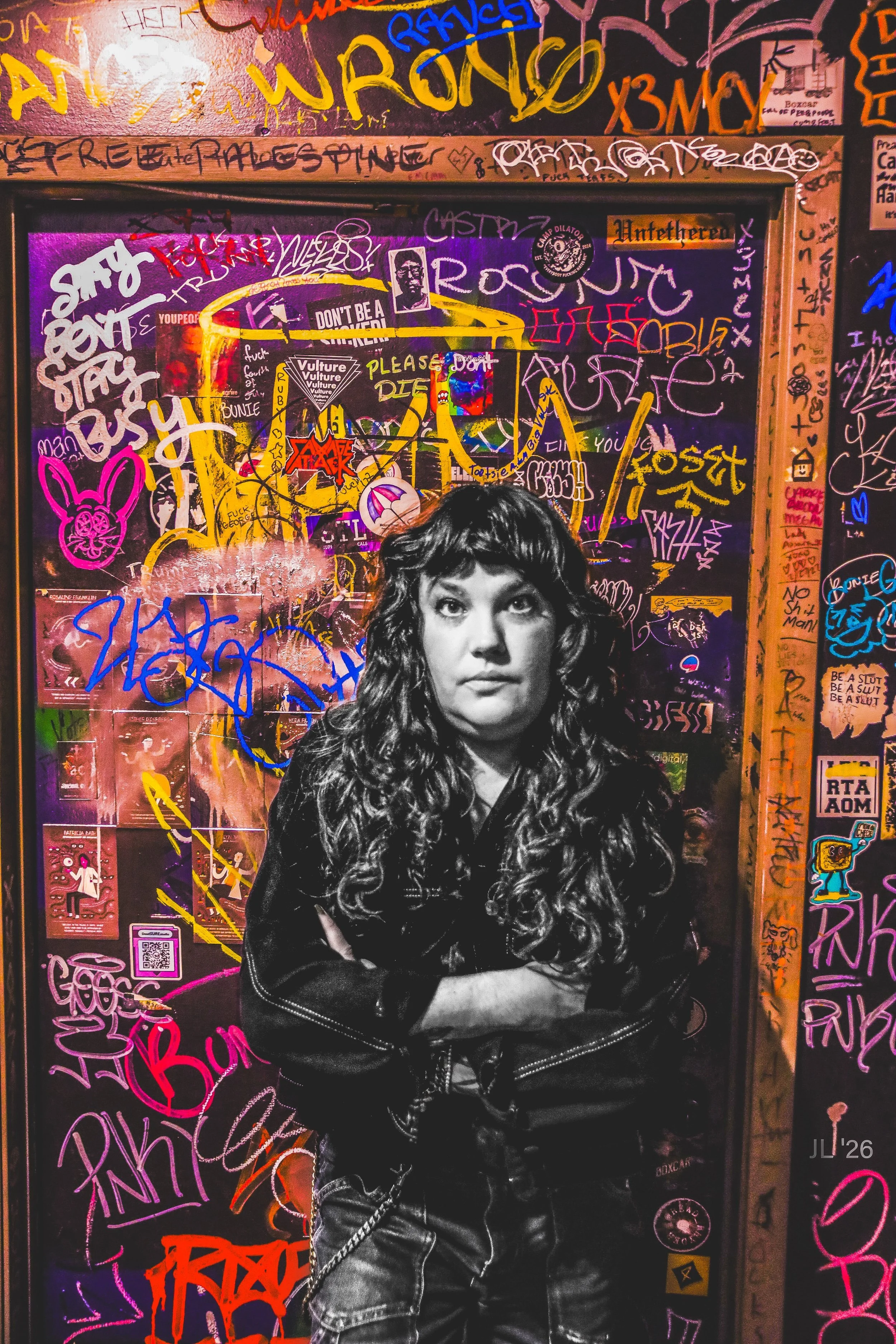
Vanessa at CBGB in St. Louis before a gig in September ‘26.
While her physical location isn’t quiet local anymore, her artwork, poetry, and music still have a profound impact here in Columbus. For example, a few months ago, I caught someone in an up and coming local band wearing a hat that bears a “sad songs make me feel better” VJS patch. With her presence still echoing throughout the city, I felt it was only fair to give her the highlight she deserved. And since I make the rules of this series, I have the authority to break them and there is no-one better to break them for.
Ok, let’s dive more into Vanessa’s journey!
1. What made you decide you wanted to be in music?
“A strong desire to express myself and a strong exhaustion of mostly white men and nepo access taking up these spaces and thinking I was never good enough to take up space. A fuck you to the systems in place and honoring myself and my desires to express myself in various forms. The pandemic really angered me and I struggled with a complete loss of identity with my creative industries being inaccessible and non urgent all while witnessing the morality and ethics of humanity be diluted down with individualism, fascism and racism. Before the pandemic, I was reading my poetry over musical soundscapes that Micah and the band were creating for me. Coming out of the isolation of the pandemic and spending so much time by myself, I came out swinging of wanting to create more aggressive performance pieces as well as a natural progression in expressing my written word.”
“I have always loved music and the culture around it. When I was younger, I thought you had to know what you were doing on stage to be on a stage. For many years, I flirted with so many of the things that make up the culture of music. I started photographing local bands on my film camera when I was young. Then I started having renegade art shows with my artwork at punk rock shows displaying my work on dumpster dove old doors or pieces of wood just for the duration of the night. That led to selling merch for friends at shows and going on some short CA tours with them. After college, I started a zine called Lubricated that my brother and I made that covered music, art, literature, film and anything creative and positive that was happening. My biggest regret about my zine era is that it covered mostly men. But I mostly only knew men in the music scene at that point. After feeling pretty burnt on male centered coverage and covering other people, I dove into my own art and my own poetry and writing. From the written and painted page, to finding freedom and expression on painting my words onto large lace panels that made larger then life interactive poems. To asking Micah to make some noise while I read my poems. That’s sort of the abbreviated version of how I’ve always been around music. Now I make my own music. I don’t use the word “proud” lightly, but that is something I am very proud of myself for.”
2. Who was your inspiration growing up?
“Hip hop music and punk rock music were my gateways into my own autonomy as a younger person. They were two scenes and genres that allowed me to escape from popular culture in my small Catholic school surroundings and suburban childhood. Everything was pretty tight knit and interconnected, so it felt like a rebellion of not being into what mostly everybody else was listening to. I liked the aggressiveness and quickness of punk songs. With hip hop, I loved the vivid story telling and smoothness in the ease of their deliveries. In my 20’s, I found Patti Smith through reading “Just Kids” on a cross country roadtrip that completely changed the trajectory of my life. It felt like a lightning bolt that was just for me and struck me at a time where I decided I wanted to quit my straight gigs and devote myself to my art. It gave language to my hopes and desires that society had taught me into submission that were deemed foolish and as part time hobbies. It gave vocabulary and a mirror to myself in that thinking outside of societal’s structures were not a crazy novelty.”
“My Grandfather was a self taught painter and renaissance artist. He was profoundly talented and self disciplined. He would paint everyday and always make time for his work. I was extremely attracted to his discipline and growing up being constantly surrounded by his work. He painted over 500 oil paintings in his time. When he passed away, my Mother started to pass along his paintings to not just friends and family, but the plumber working on the house who expressed admiration for the paintings. I felt a strong pull that the beauty of sharing one’s creative expressions could live on far after our own existence. It brought comfort and hope and light to not only the viewer, but the actions of my Mother being able to share his gifts with others. It feels like it allows him to live on within all of us with daily reminders of being surrounded by his incredible paintings and dedication. That’s something I strive within my own work. If not today, maybe someday, it will bring other folks comfort and hope. A reminder that I was here.”
3. Front woman of Call Me Rita, you also have a project with Micah Schnabel, tell us more about your music.
“It all kind of falls under the same umbrella. An urgency and immediacy to create and share that. If I have access and resources to perform and work with the band, heck yeah. But everything is so expensive and asking 6 people to free up their schedules to probably not make a lot of money is a big ask, especially as we are all getting older and have more obligations. Micah and I perform as a duo mostly these days and we can have two streams of revenue under one touring act with both of our work represented on stage and at the merch table. Our overhead is low and we are on the same page in terms of hopes, desires, expectations and needs for day to day living on and off of tour.”
“My work started off as sonic poetry under the name Call Me Rita, which was a nod to my Mother as a child who would put tin foil on her teeth because she wanted to have braces like her older sister and would walk around the playground telling other kids to call her Rita, because she loved Rita Hayworth so much. So Call Me Rita started as a sort of permission to myself to depart from who I am to who I want to be. Even when it’s just Micah and me, we still perform CMR songs. But now, I just want to be putting my work out under my name. I have found my voice, my confidence, my freedom, my I don’t give a fuck’s anymore. My work is non sugar coated reporting from America’s frontlines. Patti Smith colliding with Jim Carroll. Folk, punk, spoken word socio economic observations and honors. Joyful and celebratory rage. I try to avoid metaphors and flowery language and traditional woe’s me love songs. My work attempts to not require cultural landmarks that excludes certain listeners.”
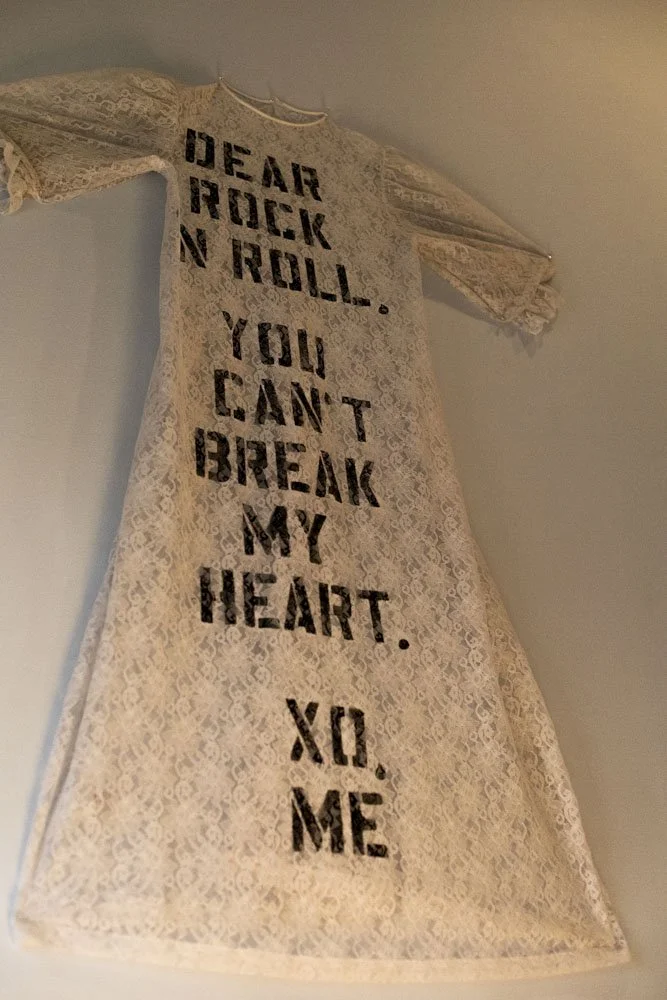
This beautiful piece was purchased by a previous WWRC highlight and is one of Vanessa’s original art pieces.
4. You put a lot of heart and soul into all of your art, whether it be the music side or physical art you make, do you ever feel like it pushes your boundaries of how vulnerable to be sometimes?
“Not anymore. Maybe when I was younger. I no longer am interested in impressing anybody or gaining fame and attention through popular culture and creation. I want to be honest with myself. I want to honor myself. I have found the more honest I am, the more it connects and resonates with other folks which feels like the biggest gift I didn’t know I wanted or was capable of sharing. I feel like the longer I have been true to my art, the more I have lost relationships in terms of not being traditional ( a wedding, a wife, a mother, a home owner, a non touring body), but I have found that those non traditional roles have allowed me to be a more sincere community member and I have started to really find my people in my late 30’s and early 40’s. I think sometimes traditional values and roles hold us captor to not wanting to let people down, when we’re really actually letting ourselves down. Sometimes I feel very lonely, but I never feel lonely when I am out on tour or playing shows. Making my art allows my loneliness to take shape, be expressed and live outside of me and my head.”
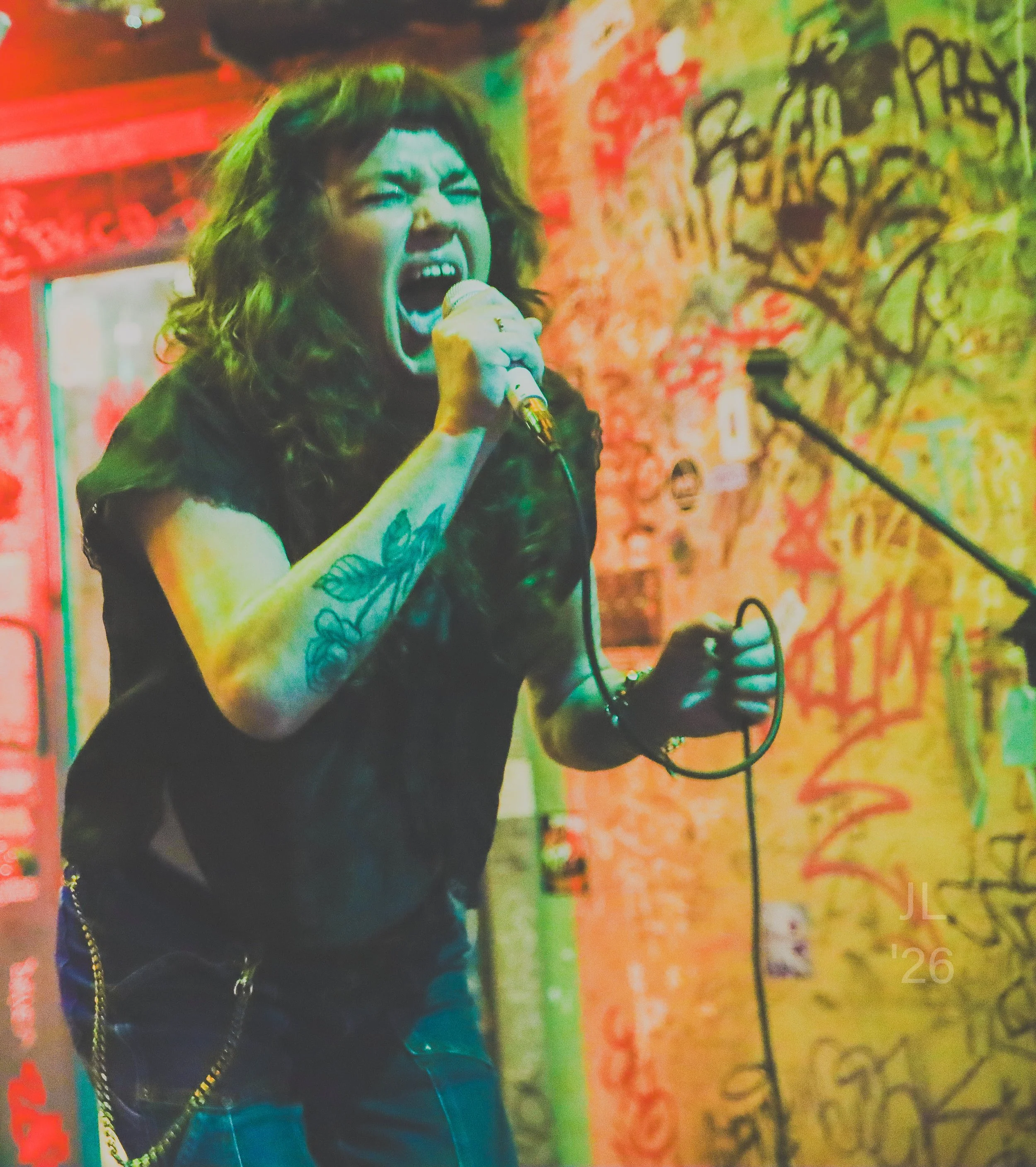
Vanessa on stage at CBGB’S St. Louis
5. You and Micah relocated to California after many years in Columbus, then made a tour stop here in May, how did it feel to reunite with Call Me Rita and to be back in the 614?
“What a treat! I take into consideration that my band are all autonomous grown adults who have very full and busy lives. I take into consideration we aren’t widely popular and make tons of money. So to have the guys believe and trust Micah and me with their time and talents feels like a responsibility and gift all at once. We used to live right next door to Rumba, which is where we played in May, so it felt oddly familiar and foreign at the same time. Not being able to go upstairs to our old apartment before or after the show definitely had some heart string pull moments, but our people, our community, our friends and family showed up and out for us and that filled my heart and didn’t leave much time for sadness or loss. And I just LOVE ripping it loudly with my full band. They are insanely talented and I feel so fortunate that all those years ago, the fellas said YES to me asking them to get weird and make noise with me.”
6. What was/is your favorite thing about the Columbus music scene?/Is there anything you miss about being a part of the scene here?
“I think the accessibility for creating and playing and executing a show is something I miss. I think Columbus has a big and small city feeling to it - where there are a lot of spaces, venues and folks who are willing to take a chance on you. Where you don’t need to be established with a LinkedIn laundry list of accomplishments, where you can still have alternative affordable spaces for band practice, where you can record a record in a basement, where a venue will book you a show without having to have a guaranteed draw, where the cost of living isn’t SUPER oppressive, so folks have a bit more free time to say yes to your creative inquiries. And all of that can happen in a condensed city space like Columbus. The Bay Area is so expensive and so expansive, those accesses become pretty diluted and distanced quickly. Not that they don’t exist, but it takes a bit more to keep your head above water and to stay dedicated to your art when accessibility is more pressed.”
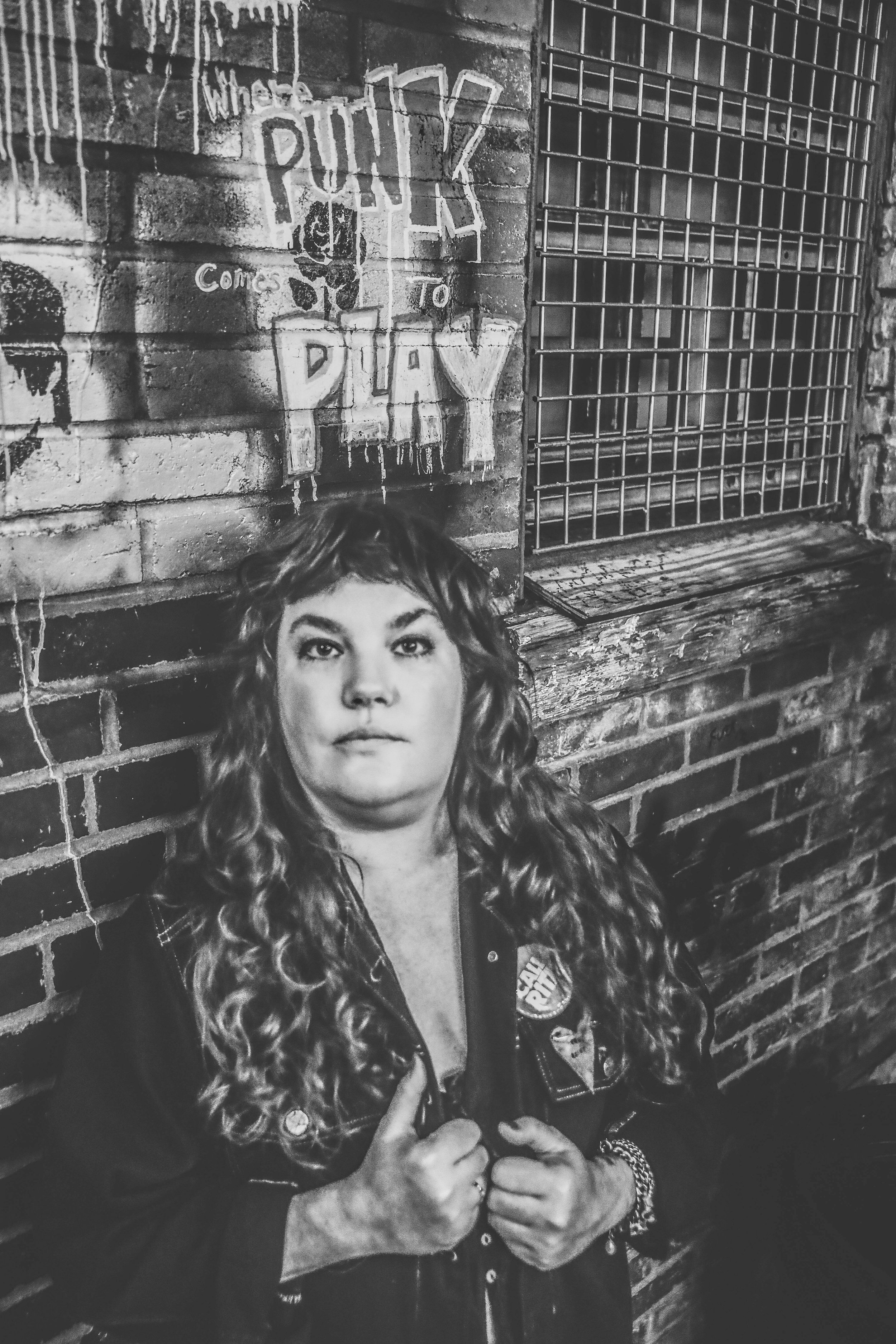
Vanessa outside CBGB St. Louis
7. What has integrating into the music scene out in NorCal been like and talk a little bit about the scene out there.
“I grew up in the Bay Area and moved to Columbus when I was 28, so I think what’s been interesting to me is to see how much things have changed out here in my 14 years gone. I was in my early 20s during the first Bay Area tech boom and national recession, so coming back to a techno fascist fist that is eradicating creative spaces and the overcall cost/quality of life is upsetting and re-triggering. My home town is no longer financially accessible to me. Just this year alone, San Francisco has lost Thee Parkside and soon to lose The Bottom of the Hill. Two independent music venues where I cut my teeth. Whether it was having renegade punk rock art shows, photographing my favorite punk bands or learning how to sell merch for bands, these spaces are now being demolished for stack and pack condos none of the patrons can afford. I don’t want to be all doom and gloom and I know there are tons of folks who are making good things happen and that it’s just new to me and going to require extra work on my end to find these spaces and communities. Earlier this spring we played The Planetarium in Richmond. CA and it’s a wonderfully inclusive all ages DIY space that a lot of folks who used to work at 924 Gilman started. That was new to both Micah and I and very inspiring and exciting.”
8. You've been touring a lot this year, what's your favorite part of that or your least favorite part?
“My favorite part of touring are the shows. That's the entire point for me. Everything else is extraneous. I love going to sleep and waking up some place new and ending my day in a completely different city or state. I feel so fortunate to have a thick rolodex of folks we’ve met through touring. From players, to venues and spaces to the folks filling up the room, it’s a richness that I’ve never felt doing anything else. It’s an extreme privilege to show up to an out of town space and not only have people want to attend the show, but a space that wants to host you and other players and artists who want to make something special happen together. Everyday I get to be me, but someplace new. That’s not super common, and though it sometimes has it’s own struggles, it’s a privilege that is not lost upon me that I always come back to in my challenging moments.”
9. Any sound advice for women trying to make it in the industry these days?
“Always pull folks up the ladder with you. As are most things, it can be an extremely competitive and patriarchal industry. I believe that when you dismantle pre existing structures that only serve patriarchy and capitalism, that’s where real change and unity can begin. For example, it can be easy to say diversify a bill, but it’s mostly white men with means who have had access to these spaces, so it often requires more work to create more inclusive spaces. Diversifying the bill with a different genre of music, or having a poet reading or local organization table are all small ways to start to change the shape of events and what they can look like. A lot of the time it’s searching Reddit and social media or making a blast out to your social media folks of looking for recommendations, especially recommendations outside the box. It’s more time consuming, but I strive to be intentional and thoughtful in the spaces we create and ask people to commune in.”
“There were so few femme or trans or queer fronted bands, zine makers, bookers, poets or art shows growing up that I want to help create those spaces that I’ve wanted to be in for so long but didn’t have the language or access or tools to create when I was younger. I know more now and hope to continue to learn and deconstruct the systems I was taught and have served.”
“And always ask. Make people tell you no.”
As always I want to say a big thank you to Vanessa for taking part in the series and for putting up with me being behind in my music going experiences. I will share with everyone that I have seen her and Micah twice now and encourage anyone who wants to share a night of enlightenment, genuine human emotion, connection and anger with the establishment to check out a show near you! They hit the road again starting November 4th in Decatur, Georgia.
To see more tour dates or check out Vanessa’s work for yourself, make sure you click the links below:
https://www.instagram.com/vanessajeanspeckman/?hl=en
https://vanessajeanspeckman.bandcamp.com/music
https://open.spotify.com/artist/37TVFo4ha7ppvyfot0Tg4q
https://www.instagram.com/call.me.rita.the.band/?hl=en
Until next time,
Peace, Love, and Join Your Local Rebellion!